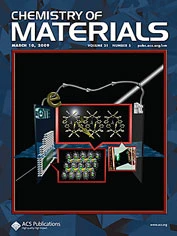
Organometallic chemistry
Study of compounds with metal-carbon bonds, bridging inorganic and organic chemistry.

Organometallic chemistry is the study of organometallic compounds, which contain at least one chemical bond between a carbon atom of an organic molecule and a metal, including alkali, alkaline earth, and transition metals, and sometimes broadened to include metalloids like boron, silicon, and selenium. The field combines aspects of traditional inorganic and organic chemistry, and organometallic compounds are widely used both stoichiometrically in research and industrial chemical reactions, as well as in the role of catalysts to increase reaction rates, where target molecules include polymers, pharmaceuticals, and many other types of practical products.
- field
- Chemistry
- known_for
- Study of compounds with metal-carbon bonds; catalysts for polymerization, pharmaceuticals, and industrial reactions
- key_concepts
- 18-electron rule, hapticity, isolobal principle, air-free techniques
- notable_compounds
- Grignard reagents, Gilman reagents, ferrocene, nickel tetracarbonyl, methylcobalamin
Lore & Background
Organometallic chemistry emerged from early developments including Louis Claude Cadet's synthesis of methyl arsenic compounds related to cacodyl, William Christopher Zeise's platinum-ethylene complex, Edward Frankland's discovery of diethyl- and dimethylzinc, Ludwig Mond's discovery of Ni(CO)4, and Victor Grignard's organomagnesium compounds. The abundant and diverse products from coal and petroleum led to Ziegler–Natta, Fischer–Tropsch, hydroformylation catalysis which employ CO, H2, and alkenes as feedstocks and ligands.
Reader's Guide
Organometallic chemistry is significant because it provides the fundamental understanding and practical tools for creating compounds with direct metal-carbon bonds, which are essential in both stoichiometric and catalytic applications. The field's concepts, such as the 18-electron rule, hapticity, and the isolobal principle, help predict stability, reactivity, and preferred geometry of organometallic complexes. These compounds are crucial in industrial catalysis for producing polymers, pharmaceuticals, and other products. The subfield of bioorganometallic chemistry studies naturally occurring organometallic complexes like methylcobalamin (a form of Vitamin B12). Grubbs and Richard R. Schrock for metal-catalyzed olefin metathesis. The field continues to rely on air-free techniques such as gloveboxes and Schlenk lines due to the high reactivity of many organometallic compounds with oxygen and moisture.
Did You Know?
- Organometallic compounds are distinguished by the prefix 'organo-', and include all compounds with a bond between a metal atom and a carbon atom of an organyl group.
- A naturally occurring organometallic complex is methylcobalamin (a form of Vitamin B12), which contains a cobalt-methyl bond.
- Some organometallic compounds such as triethylaluminium are pyrophoric and will ignite on contact with air.
- The 18-electron rule is helpful in predicting the stabilities of organometallic complexes, for example metal carbonyls and metal hydrides.
Frequently Asked Questions
Who is Organometallic chemistry?
Organometallic chemistry is the branch of chemistry focused on molecules in which a carbon atom forms a direct bond with a metal atom, spanning alkali metals, transition metals, and sometimes metalloids such as boron or silicon. It occupies a unique bridging position between organic and inorganic chemistry, drawing tools and ideas from both sides.
What are Organometallic chemistry's powers/role?
Its signature strength is serving as a catalyst that dramatically accelerates reactions used to build polymers, pharmaceuticals, and other industrial products. It also appears as a stoichiometric reagent in both laboratory research and large-scale manufacturing, where it participates directly in forging new chemical bonds.
What are Organometallic chemistry's key abilities/concepts?
Enthusiasts often point to the 18-electron rule, hapticity, and the isolobal principle as the field's core predictive toolkit for understanding how these compounds behave. Practical work in the area also demands air-free techniques, because many organometallic species are extremely sensitive to oxygen and moisture.
Who are Organometallic chemistry's most famous companions?
The fan-favorite roster includes Grignard reagents, Gilman reagents, the iconic sandwich compound ferrocene, nickel tetracarbonyl, and the biologically crucial methylcobalamin. Each one highlights a different flavor of metal-carbon bonding and occupies its own niche in synthesis or biology.
Why is Organometallic chemistry important?
Without it, modern polymer production, drug synthesis, and countless industrial processes would be far slower or simply unachievable, because organometallic catalysts lower the energy barriers that make those reactions feasible. It stands as one of the most practically consequential subfields in all of chemistry.
More in Chemistry & Materials 25-40
Elsewhere in the Chemistry & Materials universe
Spotted an error? Know more?
This is a living reference — every entry is fact-audited, and reader corrections feed straight into our audit queue. Suggest an edit · See this site's audit record