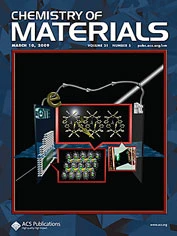
Nuclear chemistry
Sub-field of chemistry studying radioactivity and nuclear processes.

Nuclear chemistry is the sub-field of chemistry dealing with radioactivity, nuclear processes, and transformations in the nuclei of atoms, such as nuclear transmutation and nuclear properties. It encompasses the chemistry of radioactive elements like the actinides, radium, and radon, as well as the chemistry associated with equipment such as nuclear reactors, including corrosion and behavior under normal and abnormal operation. It also includes the study of chemical effects from radiation absorption in living organisms, aiding medical treatments like cancer radiotherapy, and the use of radioactive sources for tracers and material modification.
- field
- Nuclear chemistry
- known_for
- Study of radioactivity, nuclear processes, nuclear fission, and radiochemistry
- key_figures
- Henri Becquerel, Marie Curie, Pierre Curie, Ernest Rutherford, Otto Hahn, Lise Meitner, Fritz Strassmann
- related_discoveries
- Radioactivity, polonium, radium, nuclear fission, artificial radioactivity, half-life concept
Lore & Background
Marie and Pierre Curie isolated polonium and radium from uranium ore using radiometric methods.
Reader's Guide
Ernest Rutherford showed that radioactive decay follows first order kinetics with a characteristic half-life, coined alpha, beta, and gamma rays, and supervised the Geiger–Marsden experiment which disproved the plum pudding model and led to the nuclear model of the atom.
Did You Know?
- Henri Becquerel discovered radioactivity when uranium rays blackened photographic plates without an external energy source.
- Marie and Pierre Curie isolated polonium and radium from uranium ore using radiometric methods.
- Ernest Rutherford coined the terms alpha, beta, and gamma rays and showed radioactive decay has a characteristic half-life.
Frequently Asked Questions
Who is Nuclear chemistry?
Nuclear chemistry is a specialized branch of chemistry that investigates radioactive decay, nuclear reactions, and the behavior of atomic nuclei. It bridges traditional chemistry and physics by examining how elements transform at the subatomic level.
What are Nuclear chemistry's powers or role?
The field tracks how unstable isotopes break down over time, designs the chemical processes running inside nuclear reactors, and studies the chemistry of actinides, radon, and radium. It also examines how absorbed radiation affects biological tissue, a principle central to cancer radiotherapy.
How does Nuclear chemistry's story end?
As a living discipline it has no fixed finale—researchers keep pushing forward in nuclear medicine, reactor safety, and radioactive waste management. Its lasting legacy is already woven into everyday technologies like radiocarbon dating, diagnostic tracers, and power generation.
Why is Nuclear chemistry important?
It underpins life-saving medical procedures such as targeted radiation therapy and imaging with radioactive tracers. It also keeps nuclear infrastructure safe by studying material corrosion and the chemical behavior of components under both normal and abnormal operating conditions.
Who are Nuclear chemistry's key figures?
Pioneers including Henri Becquerel, Marie and Pierre Curie, and Ernest Rutherford discovered radioactivity and isolated new elements like polonium and radium. Otto Hahn, Lise Meitner, and Fritz Strassmann later revealed nuclear fission, while the half-life concept gave the field its quantitative backbone.
More in Chemistry & Materials 25-40
Elsewhere in the Chemistry & Materials universe
Spotted an error? Know more?
This is a living reference — every entry is fact-audited, and reader corrections feed straight into our audit queue. Suggest an edit · See this site's audit record