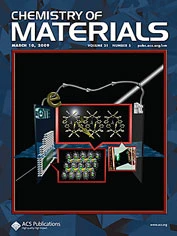
Inorganic compound
Chemical compounds typically lacking carbon–hydrogen bonds.

An inorganic compound is typically a chemical compound that lacks carbon–hydrogen bonds, meaning it is not an organic compound. The study of inorganic compounds is a subfield of chemistry known as inorganic chemistry. Inorganic compounds comprise most of the Earth's crust, although the compositions of the deep mantle remain active areas of investigation.
- modern_usage_note
- ICSD allows no more than one C-H or C-C bond per formula unit; IUPAC defines inorganic polymer as lacking carbon in skeletal structure
Lore & Background
The Inorganic Crystal Structure Database (ICSD) in its definition of 'inorganic' carbon compounds states that such compounds may contain no more than one C-H or C-C bond per formula unit.
Reader's Guide
The concept of an inorganic compound is central to chemistry, yet its definition remains contested and context-dependent. The source article notes that an inorganic compound is typically one lacking carbon–hydrogen bonds, but this boundary is porous: allotropes of carbon and simple carbon compounds like carbon dioxide are often considered inorganic. Modern usage reflects ongoing ambiguity: the Inorganic Crystal Structure Database allows either C-H or C-C bonds but not both, while IUPAC defines inorganic polymer by the absence of carbon in its skeletal structure. The book series Inorganic Syntheses does not define inorganic compounds at all, focusing instead on metal complexes of organic ligands. This lack of a single authoritative definition underscores that the classification is a practical convention rather than a rigid natural law. The article emphasizes that inorganic compounds comprise most of the Earth's crust, and that many such compounds occur naturally within living organisms, further blurring the line between organic and inorganic realms.
Did You Know?
- All allotropes of carbon (graphite, diamond, buckminsterfullerene, graphene) are often considered inorganic.
- The Inorganic Crystal Structure Database allows no more than one C-H or C-C bond per formula unit in inorganic carbon compounds.
- IUPAC defines an inorganic polymer as having a skeletal structure that does not include carbon atoms.
A Discipline Without Boundaries: Scope and Industrial Reach
Inorganic chemistry is the branch of science devoted to the synthesis and study of compounds that fall outside the carbon-based domain of organic chemistry, though the boundary between the two is far from rigid, particularly in organometallic chemistry where metal-carbon bonds create substantial overlap. The practical reach of inorganic chemistry is staggering: it underpins catalysis, materials science, pigments, surfactants, coatings, pharmaceuticals, fuels, and agricultural chemistry. Historically, the industrial might of a nation was literally measured by its sulfuric acid production. Ammonium nitrate, a cornerstone of fertilization, is manufactured by first producing ammonia through the Haber process and then oxidizing it to nitric acid. Portland cement represents another colossal inorganic material. In the catalytic arena, vanadium(V) oxide drives the oxidation of sulfur dioxide, while titanium(III) chloride facilitates alkene polymerization. Even within organic chemistry, inorganic reagents such as lithium aluminium hydride play indispensable roles. In short, inorganic chemistry forms the structural and functional backbone of modern industrial production.
The Spectrum of Bonding: From Ionic to Covalent
Inorganic compounds display a remarkable diversity of bonding character. At one end sit ionic salts like magnesium chloride, where Mg²⁺ cations pair with Cl⁻ anions, or sodium hydroxide, composed of Na⁺ and OH⁻ units. At the other end, compounds such as sulfur dioxide and iron pentacarbonyl are highly covalent. Between these extremes lies polar covalent bonding, a hybrid character common to many oxides, carbonates, and halides. This bonding variety gives inorganic salts their characteristic high melting points and, in cases like NaCl, exceptional water solubility. Acid-base interactions add another layer: when a reactant bears hydrogen atoms, proton exchange drives the reaction. The Lewis framework broadens this further—any species that accepts an electron pair is a Lewis acid, while any that donates one is a Lewis base. The HSAB theory refines these interactions by accounting for the polarizability and ionic size of the participants, offering a more nuanced predictive tool for inorganic reactivity.
Coordination Chemistry: Metals, Ligands, and the Geometry of Complexity
Coordination compounds occupy a central place in inorganic chemistry. Classical examples feature a metal center bound to ligands through lone pairs on main-group atoms—water, ammonia, chloride, or cyanide ions. In modern practice, virtually any organic or inorganic molecule can serve as a ligand. The metal is typically drawn from groups 3 through 13, the trans-lanthanides, or the trans-actinides, though from a broad perspective nearly every compound can be framed as a coordination complex. The stereochemistry is rich: structures range from tetrahedral, as in TiCl₄, to square planar in certain nickel complexes, to octahedral in cobalt complexes. Alfred Werner's landmark separation of two enantiomers of a cobalt-ammonia complex proved that chirality is not exclusive to organic molecules. Biologically, transition metals in coordination environments are vital—iron in hemoglobin being the most familiar example. Supramolecular coordination chemistry remains a vibrant frontier within this subfield.
From Lavoisier to the Haber-Bosch Era: Milestones in Main Group Chemistry
Main group compounds—built from elements in groups I through VII and 0, with group 3, group 12, and sometimes the lanthanides and actinides included—have been known since chemistry's earliest days. Elemental sulfur and distillable white phosphorus were among the first substances studied. The identification of oxygen by Lavoisier and Priestley was transformative, not merely for recognizing a diatomic gas but for establishing stoichiometric ratios as the language of chemical description. The early twentieth century brought perhaps the most consequential inorganic synthesis: Carl Bosch and Fritz Haber's practical ammonia production using iron catalysts, which reshaped global agriculture and demonstrated the profound impact of inorganic chemical engineering on civilization. Typical main group species include SiO₂, SnCl₄, and N₂O, while others like B(CH₃)₃ straddle the organometallic boundary. In nature, phosphate in DNA blurs into bioinorganic chemistry, and carbon-rich structures such as fullerenes and buckytubes, despite lacking hydrogen ligands, are sometimes classified as inorganic.
Frequently Asked Questions
What exactly is an inorganic compound?
In the simplest terms, it is a chemical compound that lacks carbon–hydrogen bonds, which sets it apart from organic molecules. This broad category spans everything from table salt and rust to the silicate minerals that dominate the planet's solid surface.
How do you decide whether a compound is inorganic or organic?
The classic rule of thumb is the absence of C–H bonds, though reference databases such as the ICSD tolerate at most one C–H or C–C bond per formula unit before reclassifying a substance. For polymers specifically, IUPAC draws the line at whether carbon appears in the skeletal backbone.
Where do inorganic compounds show up in the real world?
They make up the overwhelming majority of the Earth's crust, from quartz and feldspar to iron oxides and sulfides. Even the exact mineral assemblages in the deep mantle remain an active research frontier for geologists and mineralogists.
Which branch of chemistry is dedicated to inorganic compounds?
Inorganic chemistry is the subfield that investigates their structures, bonding patterns, and reactivity. It overlaps heavily with materials science, solid-state physics, and geochemistry because so much of the non-biological world is built from these compounds.
Why are inorganic compounds so central to materials science?
They form the backbone of ceramics, semiconductors, catalysts, and structural minerals that engineers rely on daily. Their ionic or metallic bonding and rigid crystal lattices give them mechanical and electronic behaviors that flexible organic molecules simply cannot replicate.
More in Chemistry & Materials 1-24
Elsewhere in the Chemistry & Materials universe
Spotted an error? Know more?
This is a living reference — every entry is fact-audited, and reader corrections feed straight into our audit queue. Suggest an edit · See this site's audit record